The short version
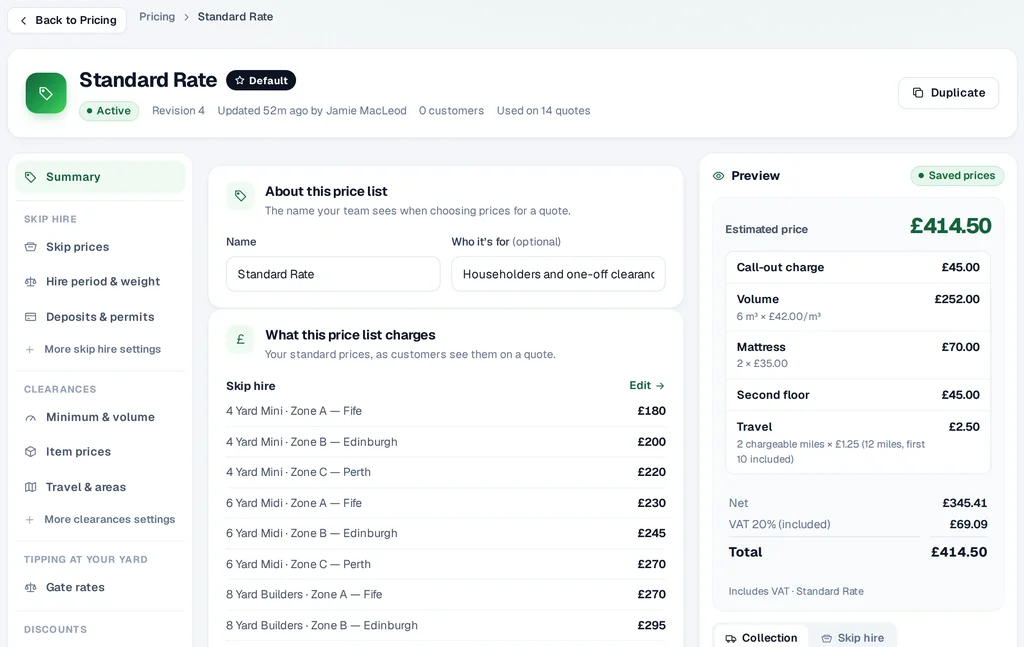
- Price from your costs: disposal, labour, the vehicle and travel. Then add your margin.
- Measure the volume, don’t guess it. Cubic metres are more consistent than “half a van”.
- Price the items that cost more to dispose of separately: mattresses, fridges and freezers, upholstered seating, plasterboard, paint.
- Charge for access and time: floors without a lift, long carries, parking, sorting kept items.
- Write it all down as a price list, so every quote is built the same way.
Start from your costs, not the competition
It’s tempting to look at what the firm down the road charges and go a little lower. The trouble is that you don’t know their costs, and your tipping charges, wages and van costs are your own. A price that works is built from four costs, plus your margin:
| Cost | What drives it |
|---|---|
| Disposal | What your receiving sites charge you, usually per tonne, with different rates for different waste. Some waste, such as upholstered seating, has to go to a specific kind of site. |
| Labour | How many people, for how long. Include loading, sorting, sweeping up and the drive to the tip. |
| Vehicle | Fuel, insurance, maintenance and the van’s share of the week. A bigger vehicle carries more but costs more to run. |
| Travel | Distance from your base. Past a certain radius, every mile is unpaid time. |
Measure the volume
Volume is usually the biggest part of a clearance price. Cubic metres are more reliable than van loads, because your van and the customer’s idea of “a van load” are rarely the same size. Measure it on a survey visit, or ask the customer for photos of every room, the loft, the garage and the garden.
Two habits make volume estimates better over time: record what each job actually came to, and compare it with what you quoted. After a few months you’ll know how a three-bedroom semi compares with your estimate.
Price the items that cost more to dispose of
Some items cost more to deal with than their volume suggests, and leaving them out is where margins go. Price them as separate lines:
- Upholstered seating. In England, sofas, armchairs and other upholstered domestic seating containing POPs must not go to landfill; they go to an authorised incinerator or cement kiln and have to be kept separate. See EWC codes: sofas and armchairs.
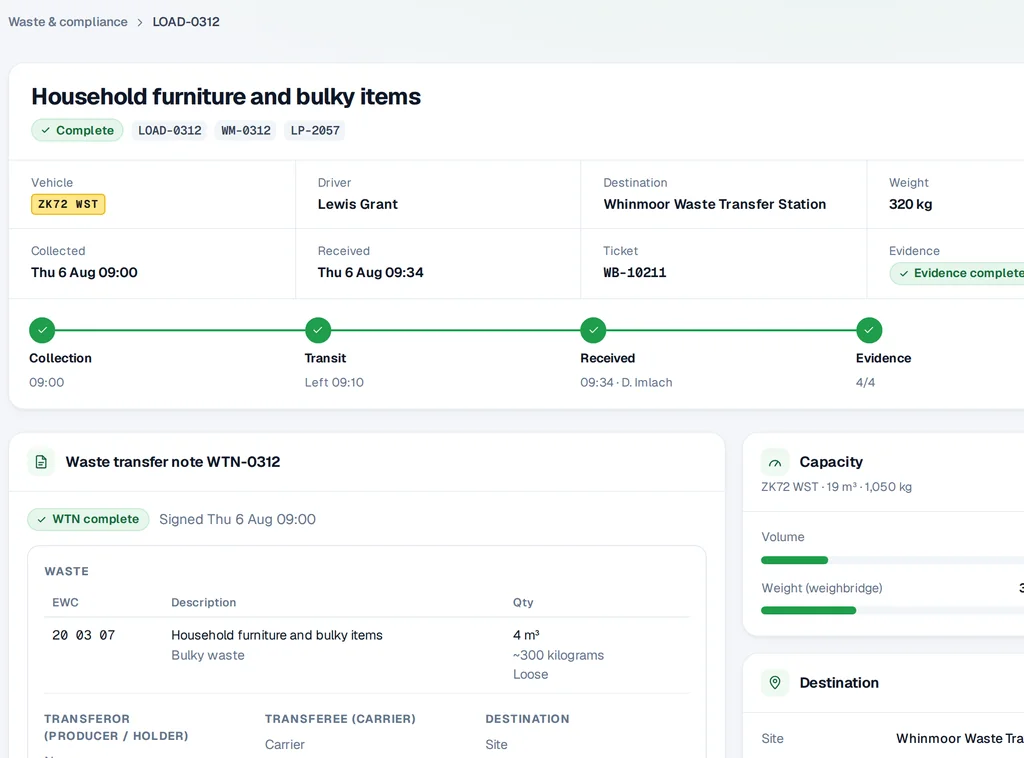
- Fridges and freezers. Equipment containing CFCs is hazardous waste (20 01 23*) and needs a site that takes it, often at its own rate.
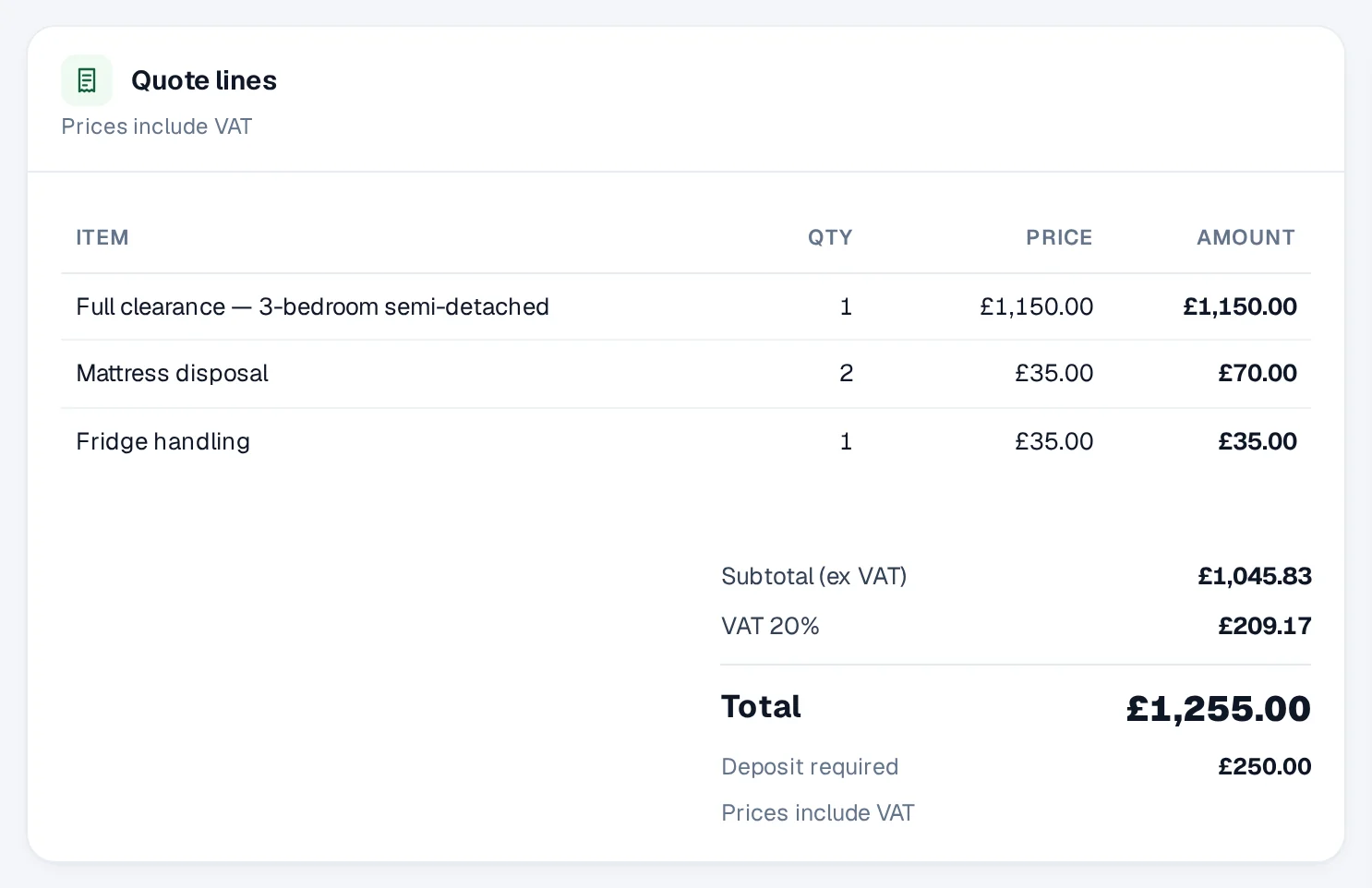
- Mattresses. Some sites charge for them per item, so check your sites’ rates.
- Plasterboard, paint, tyres and electricals. Each often has its own rate or route.
Price access and labour
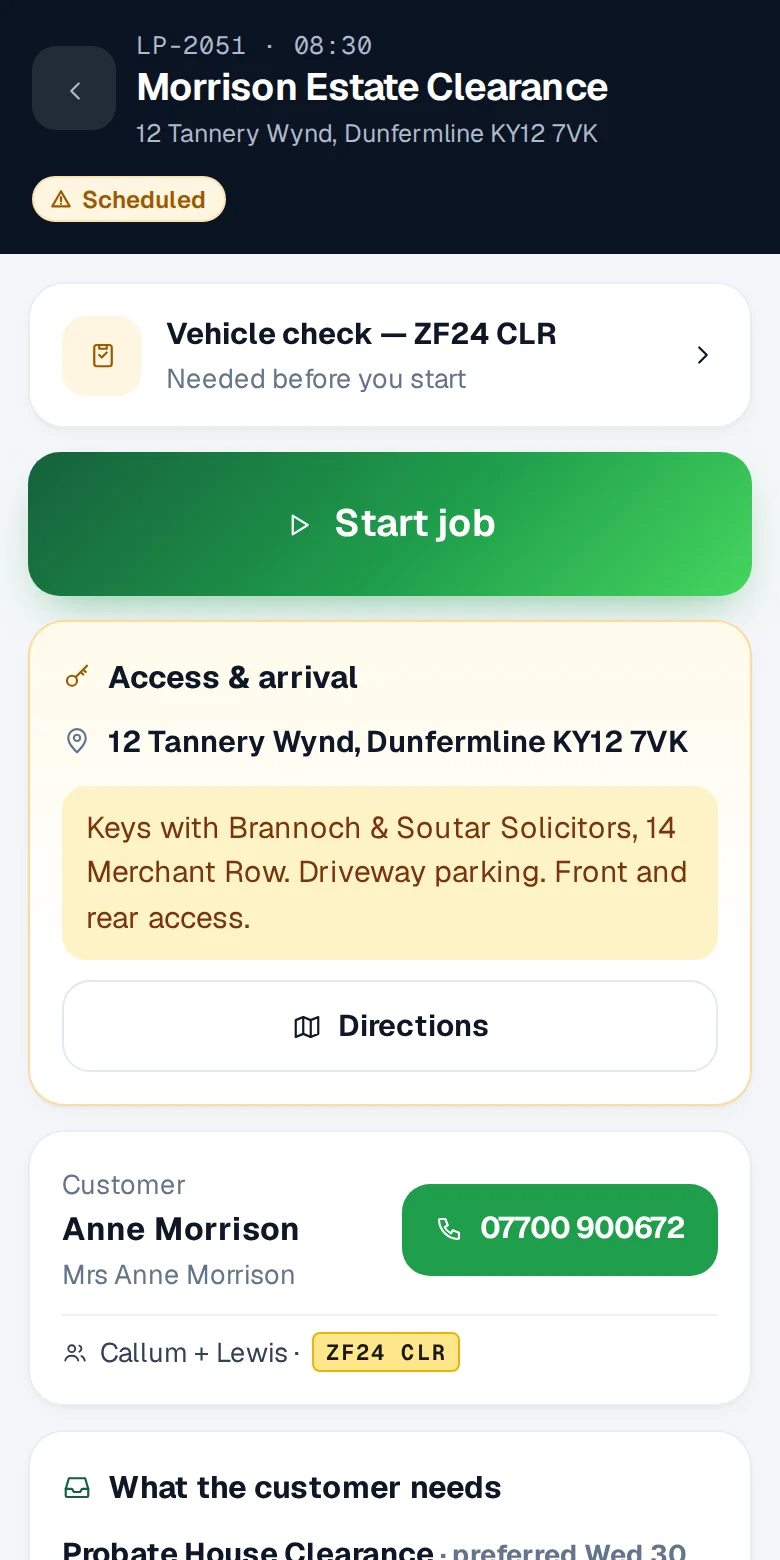
Two jobs with the same volume can take very different amounts of time. Ask about these before you quote, and price them in:
- Floors without a lift, and narrow stairs
- Long carries from the door to where the van can park
- Parking restrictions, permits and time limits
- Lofts, sheds and gardens that need clearing
- Sorting: items the family wants kept, paperwork to set aside, things going to charity
- A deep clean or sweep-up after the clearance
Items to keep deserve a mention of their own. On probate and family clearances, the job isn’t done when the house is empty; it’s done when the things that weren’t meant to go haven’t gone. Agree the list before the day, and allow time to find them.
Travel, minimum charges and deposits
- Travel zones. Include a radius in your price, then charge per mile or per zone beyond it.
- Minimum charge. A small job still costs a van, a crew and a trip to the tip. Set a minimum so a single item doesn’t lose you money.
- Deposits. A deposit on larger clearances protects your diary against cancellations.
- Show the full price. Show householders the total they will pay, including any VAT.
Write it down as a price list
The point of all this is consistency. When the volume rate, the item charges, the floor charge, the travel rule and the minimum are written down, anyone in the office quotes the same job at the same price, and you can see what each part contributes. Review the list whenever your tipping charges change.
Sources
- GOV.UK: Manage waste upholstered domestic seating containing POPs (updated 29 July 2026)
- SEPA: Waste upholstered domestic seating containing POPs
- NetRegs: Waste transfer notes and how to complete them
- legislation.gov.uk: List of wastes (Commission Decision 2000/532/EC, Annex, as retained in UK law)
Last checked 3 November 2026. Rules and dates can change, so check the official guidance for your nation before relying on them. This guide is general information, not legal advice.